Pinus nigra Maritima (Corsican Pine)
Price £ each (ex VAT) |
||||
| Height | Age | 25+ | 100+ | 500+ |
| 30-40cm | 2u1 | 0.77 | 0.44 | 0.39 |
Delivery
Bareroot from November to April
Prices
The prices above are offered as a guide and may be subject to fluctuation dependant upon the time of season and supply. We recommend that contact is made with the office for larger orders, a quotation and to check availability Alternatively please contact us to enquire about opening a wholesale account.
Native to southern Italy and Sicily, the Corsican Pine is widely planted all over Britain and is an important commercial forestry tree. It is tolerant of a wide range of soils, including chalk, and copes with wind and pollution well. Fast-growing, it makes a rather narrow, shapely tree which makes a good specimen tree for parks and large gardens.
Site and soil
Most soils, including chalk, but prefers well-drained soil. A good tree for urban areas, coastal sites and exposed conditions.
Height and spread
After 10 years: 8m x 4m
After 20 years: 15m x 6m
Leaf and bark
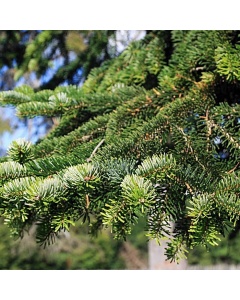
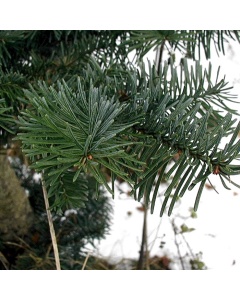
The needle-like leaves are green, or grey-green. They are held more sparsely than on the Austrian Pine, are longer and slightly twisted. The bark is dark silvery grey with deep fissures.
Flower, seed and fruit
The flowers open in May. The females are red, males yellow, and are followed by brown cones to 7.5cm long. The cones are borne very plentifully.
Uses
Parks, large gardens, specimen tree, commercial plantations, street tree, shelterbelts. The wood is very straight and free of knots and is used for construction, pit props plywood and paper. Turpentine is extracted from the resin and the leaves for medicinal and other purposes. The trees are tapped for resin, which in its solid form is used by violinists on their bows.
Wildlife
Plantations offer shelter to birds, deer and small mammals. A variety of birds are attracted to the Corsican Pine to feed on the cones.
Pruning
The Corsican Pine is not usually pruned.